
Vulnerability Response with ValueCentrix
Stop Treating Vulnerabilities as a List. Start Treating Them as Operational Risk.
Vulnerability scanners find thousands of issues. Security teams create spreadsheets. IT teams receive bulk remediation requests with no business context. Months later, the same vulnerabilities appear on the next scan. The problem isn't detection. It's what happens after. ValueCentrix implements Vulnerability Response on ServiceNow so organizations can prioritize vulnerabilities by real business risk and drive remediation through the same operational workflows IT already uses.

Scan Results Pile Up. Remediation Falls Behind.
Vulnerability management programs generate enormous volumes of findings. Every scan produces a list. Every list gets triaged. But triage without business context leads to flat prioritization where a critical vulnerability on a test server receives the same urgency as one on a production database. Remediation requests land in IT queues without clear ownership or deadlines. Patching competes with project work. Over time, backlogs grow and the organization's actual risk exposure becomes impossible to measure from scan data alone.
Prioritize by Business Risk. Remediate Through IT Workflows.
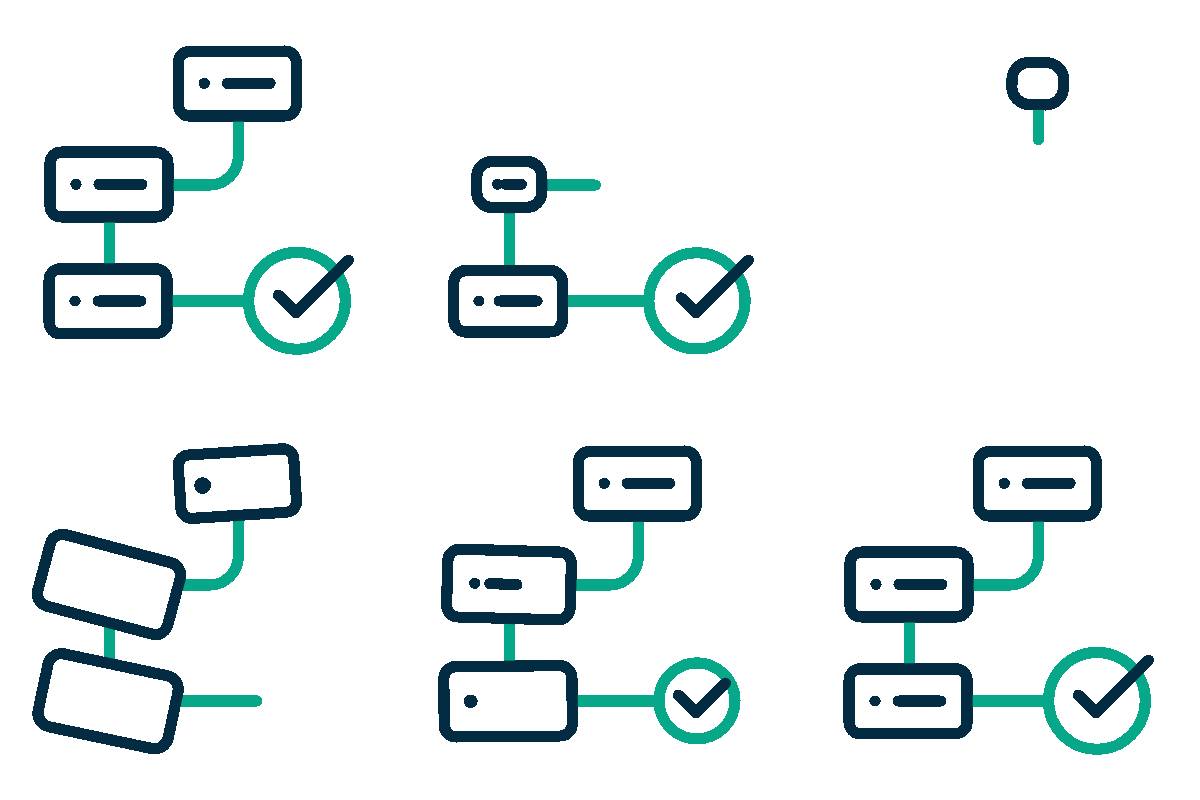
ServiceNow Vulnerability Response ingests scan results, correlates vulnerabilities to CMDB assets and business services, and calculates risk based on asset criticality and exposure. Remediation tasks route directly into IT workflows with clear ownership, deadlines, and escalation paths. Security teams track progress from identification through closure without relying on spreadsheets or status meetings.


ValueCentrix Closes the Gap Between Security Findings and IT Action
Most vulnerability programs stall at the handoff between security and IT. ValueCentrix builds the bridge. We implement Vulnerability Response so that findings translate into prioritized, trackable work that IT teams actually complete.
Tuned to Your Risk Priorities
We configure risk scoring and prioritization rules around your organization's asset classifications, service criticality, and risk appetite. What gets flagged as urgent reflects your business, not just the scanner's severity rating.
Embedded in IT Operations
Remediation only happens when IT acts on it. We route vulnerability tasks into change management and incident workflows so patching and mitigation follow the same governed processes IT already trusts.
Designed to Shrink the Backlog
Vulnerability backlogs grow when prioritization is unclear and accountability is weak. We implement workflows that assign ownership, enforce deadlines, and escalate aging vulnerabilities so the backlog contracts instead of compounding.


Don't Just Scan for Vulnerabilities. Fix the Ones That Matter.
Vulnerability Response turns scan data into prioritized, trackable remediation. With ValueCentrix and ServiceNow, organizations close the gap between detection and action, reduce real business risk, and prove progress to auditors and leadership.